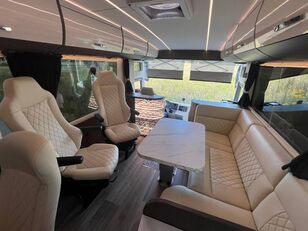
MAN staco home-bus


≈ $20,880
If you decide to buy equipment at a low price, make sure that you communicate with the real seller. Find out as much information about the owner of the equipment as possible. One way of cheating is to represent yourself as a real company. In case of suspicion, inform us about this for additional control, through the feedback form.
Before you decide to make a purchase, carefully review several sales offers to understand the average cost of your chosen equipment. If the price of the offer you like is much lower than similar offers, think about it. A significant price difference may indicate hidden defects or an attempt by the seller to commit fraudulent acts.
Do not buy products which price is too different from the average price for similar equipment.
Do not give consent to dubious pledges and prepaid goods. In case of doubt, do not be afraid to clarify details, ask for additional photographs and documents for equipment, check the authenticity of documents, ask questions.
The most common type of fraud. Unfair sellers may request a certain amount of advance payment to “book” your right to purchase equipment. Thus, fraudsters can collect a large amount and disappear, no longer get in touch.
- Transfer of prepayment to the card
- Do not make an advance payment without paperwork confirming the process of transferring money, if during the communication the seller is in doubt.
- Transfer to the “Trustee” account
- Such a request should be alarming, most likely you are communicating with a fraudster.
- Transfer to a company account with a similar name
- Be careful, fraudsters may disguise themselves as well-known companies, making minor changes to the name. Do not transfer funds if the company name is in doubt.
- Substitution of own details in the invoice of a real company
- Before making a transfer, make sure that the specified details are correct, and whether they relate to the specified company.

 +34 610 06 ...
+34 610 06 60 79


 Italy, Bolzano


 6-9
 Belgium, Thuin


 5
 Norway, Fosser


 10
Norway, Fosser


 8
 France, St Genis Laval


 France, St Genis Laval


 17
Norway, Fosser

 5
Norway, Fosser


 Austria, Tribuswinkel


 2
 Netherlands, Kolhorn


 Finland, Kauhava


 27
 Germany, Untersteinach


 6
 Japan


 17
 Estonia, Kesklinna


 6
Netherlands, Roosendaal


 4
 Hungary, Polgár


 10
Japan


 8
Hungary, Polgár


 2
Germany, Pilsting

1. All documentation completed and vehicle legally registered and approved as an Autobús Vivienda (Motorhome).
2. Two new starter batteries installed.
3. Complete removal of the original bus interior, including flooring, ceiling, seats, wall coverings and all original interior fittings.
4. All original roof-mounted air conditioning units removed.
5. All windows tinted with specialist solar window film.
6. New thermal insulation installed in the floor.
7. New flooring installed and stained.
8. Full roof repair and waterproofing carried out, including fibreglass repairs, sealing of openings left by the original air conditioning units, application of resin and fibreglass, levelling of uneven areas and final protective waterproofing coatings.
9. New roof skylight installed.
10. MaxxAir roof ventilation fan installed to improve interior ventilation.
11. Roof prepared for solar installation, including cable entry points, waterproof cable glands and preparations for solar panel wiring.
12. Electrical installation started in the luggage compartment, including electrical protection devices and preparation for an external 230V shore power connection.
13. Interior thermal insulation work commenced.
14. Rear wall fully insulated and finished with wall panels.
15. Samsung Mini Split inverter air conditioning system professionally installed by a specialist certified company, featuring Wi-Fi control and a dehumidification function.
16. Exterior LED lighting strips installed along the upper front and rear of the bus.
17. Multi-camera monitoring system installed, featuring split-screen display, front, rear and side cameras, Wi-Fi connectivity and mobile phone connection.
18. Parking and reversing sensors installed.
19. New seat covers fitted.
20. Wireless mobile phone charger installed.
21. Original MAN adjustable air suspension system, allowing the rear of the bus to be raised and lowered.
Current Project Status
The bus has received significant investment in documentation, mechanical equipment, repairs, waterproofing, insulation and additional features.
A substantial amount of the preparation work for its conversion into a motorhome has already been completed. The vehicle is legally registered as an Autobús Vivienda, with the main structural preparation, insulation and essential installations underway or completed.
The remaining work involves continuing the interior conversion, fitting the remaining furniture and completing the final interior finishes.